The budget marketers have, and the budget they wish they had
Ask a B2B marketer where their budget goes and you get one answer. Ask where they would put another £100k and you often get a very different one. That gap says a lot.
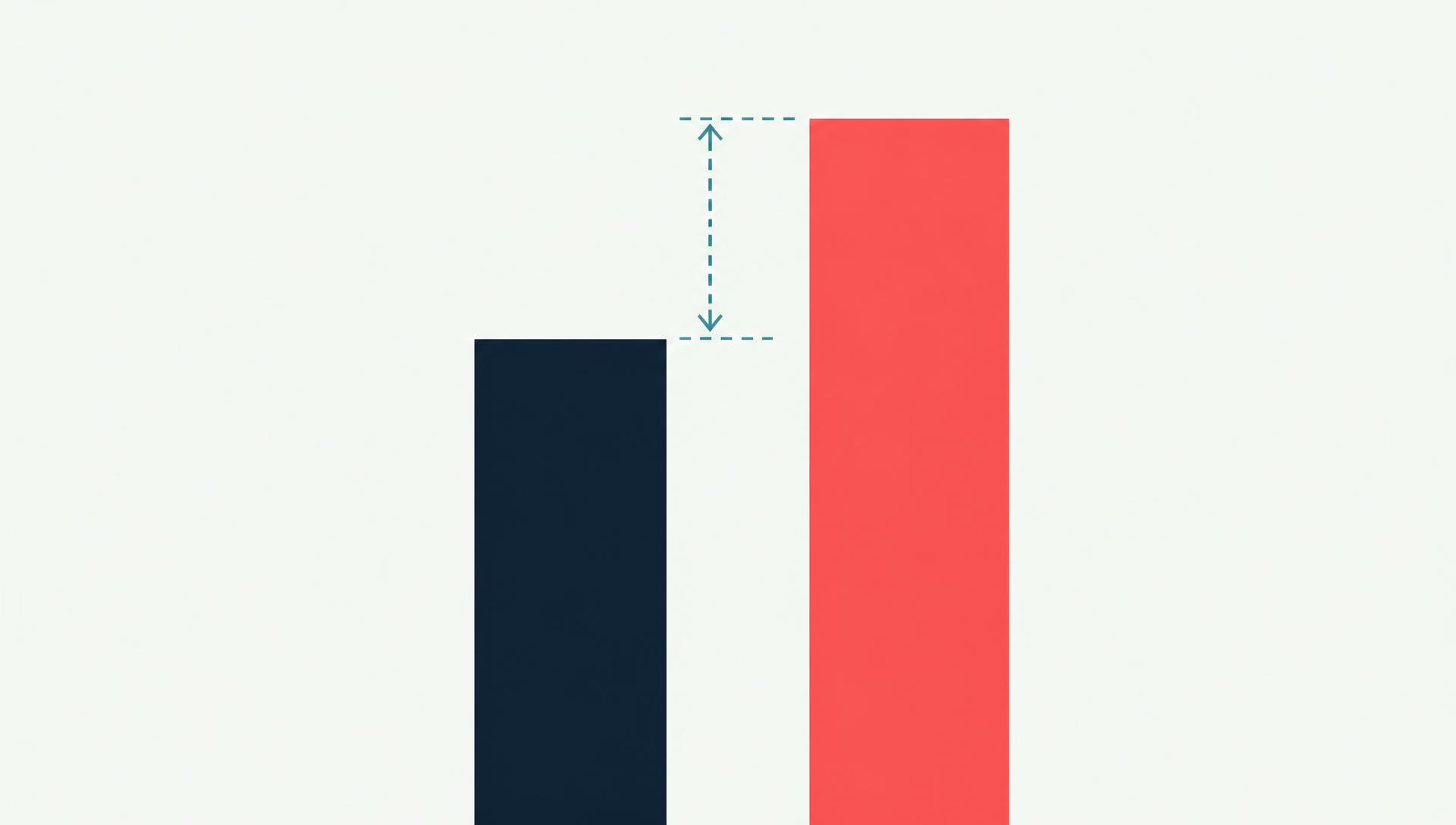
Ask a B2B marketer where their budget goes and you will get one answer.
Ask where they would put another £100k and you often get a very different one.
That gap is interesting, because it says something about the difference between the marketing plan a business has approved and the one its marketers might choose if they had more freedom.
In our State of B2B Marketing 2026 survey, we asked marketers how they split their resource between winning new customers and growing existing ones.
Forty-two per cent said 10% or less of their resource goes into existing customer expansion. A quarter put somewhere between 25% and 50% towards it, while only 8% said the majority of their resource is focused on retention and net revenue retention.
None of that is especially surprising.
New business tends to arrive with a very visible set of expectations. There is a pipeline target, a sales number, a forecast and a regular conversation about whether the business is on track.
Marketing is normally expected to contribute to that number, so naturally a large part of the budget gets built around finding, engaging and converting new customers.
Then we asked something different.
If you were handed another £100k tomorrow, where would you spend it?
Customer marketing, expansion and retention tied for first place. Brand awareness, including video, PR and top-of-funnel activity, took the other top spot.
Operations and data came last, with a single vote.
The write-in answers went in a similar direction, with marketers talking about better demand capture foundations, roundtables, bespoke events and peer-led insight.
That is where it gets more interesting.
Because the question is not really whether marketers understand the value of existing customers, brand or any of those other areas.
The more useful question is why some of the things they would fund first with new money are not better represented in the budget they already have.
What would your extra £100k actually tell you?
Imagine the question landed on your desk tomorrow.
No business case. No reforecast. No fight with finance.
You simply have another £100k to spend.
Would you put it into customer marketing?
Brand?
A better website?
A small number of genuinely useful customer events?
Research?
Fixing the demand capture infrastructure underneath everything else?
Whatever your answer is, the interesting part is not necessarily the tactic.
It is why that activity sits on the wish list rather than inside the plan.
There will often be a perfectly good reason.
If the business urgently needs new customers, acquisition may quite rightly take the majority of the budget.
If churn is low and expansion is already well covered by another team, customer marketing may not need significant additional investment.
But in other businesses, the gap can reveal something else.
Marketers may be funding what they are expected to fund rather than everything they believe could contribute to growth.
Budget follows ownership
One reason for that is relatively simple.
Budget tends to follow accountability.
New logo revenue usually has an obvious owner. Sales carries a target. Marketing carries some form of pipeline expectation. Progress is reported regularly and there is a clear commercial consequence if the number is missed.
Growing existing customers can be less straightforward.
The responsibility might sit somewhere between customer success, account management, sales and marketing.
Everyone has some influence over the result, but that does not always mean anyone owns the full commercial problem.
That becomes important during planning.
It is much easier to defend a budget line when someone can say: this is my target, this is the activity supporting it and this is the number we are trying to move.
It becomes harder when the outcome belongs to four different teams.
Forrester estimates that 61% of B2B revenue comes through renewal and expansion from existing customers.
Yet in many organisations, the operating model around customer growth still does not look anything like the operating model around acquisition.
That is not necessarily a marketing problem.
It is a business one.
Then there is the measurement problem
Acquisition also comes with an established language.
Leads. Meetings. Opportunities. Pipeline.
Even when attribution is imperfect, there are familiar numbers available to put in front of a board, CRO or CFO.
Other areas of marketing can be harder to package so neatly.
Customer marketing might influence renewal, cross-sell, expansion, product adoption, advocacy and net revenue retention.
Brand might affect familiarity, preference, direct traffic, response to outbound, sales conversion and future demand.
An event might strengthen an account relationship six months before an opportunity appears.
Those are commercially useful outcomes, but they are rarely created by marketing alone and they do not always appear inside the same quarter.
That matters when budgets are being scrutinised line by line.
The activities with an immediate and familiar number attached to them are often easier to defend.
That does not automatically make them the wrong investments.
But it does mean measurability can start shaping the plan as much as strategy does.
There is evidence that this is happening beyond our own survey.
Gartner's 2026 CMO Spend Survey found spending on customer loyalty and retention had fallen 29% since 2024 to less than 15% of total media spend, while awareness and conversion together accounted for 62.6%.
Its warning was that investment is increasingly concentrating around the parts of the customer journey that are easier to measure and automate.
The risk is fairly obvious.
Over time, marketing budgets can become optimised around the things an organisation can most easily report, rather than the full range of things that help it acquire, retain and grow customers.
And that makes the job harder than it looks
This is the reality a lot of B2B marketers are operating inside.
You might believe that investing more heavily in brand will make future demand generation work harder.
You might be able to see untapped opportunity within the customer base.
You might know that another 2,000 leads are not what sales needs next.
But the marketing plan still has to survive contact with the forecast, quarterly targets, attribution models, sales expectations and finance.
Try moving £100k out of demand generation while the CRO is asking where another £8m of pipeline is going to come from.
It might be the right decision.
It is still not an easy conversation.
That is why the imaginary £100k is useful.
Not because anyone is necessarily going to give it to you, but because your answer exposes the things you believe would make a difference if the normal constraints disappeared.
The extra £100k probably isn't coming
Which makes a different question more useful.
What does your answer tell you about the money you already have?
If customer marketing would be the first place you put another £100k, is there a smaller test you could fund now?
If brand is at the top of the list, is it genuinely impossible to invest in, or has it gradually been squeezed out by activities that are easier to attribute?
If better events, research or demand capture foundations are sitting on the wish list, what keeps losing the argument against them?
And if you believe one of those things could contribute more to growth than something already in the plan, what evidence would you need to start moving budget towards it?
None of this means ripping up an acquisition plan or moving money simply because another area feels more interesting.
It means interrogating the gap.
Because the difference between the budget you have and the budget you wish you had might reveal more than a list of things you cannot currently afford.
It might tell you where your marketing plan is being shaped by organisational ownership, measurement and short-term expectations.
And occasionally, it might show you where the next useful investment is already hiding.
Work with the budget you have. Keep making the case for the one you want.
If your imaginary £100k went somewhere your current budget doesn't, you are clearly not alone.
Forty-two per cent of the marketers we surveyed put 10% or less of their resource into existing customer expansion. Brand, retention and customer marketing were exactly where many wanted to put additional money.
That doesn't necessarily mean their current plans are wrong.
Especially inside a large organisation, marketing budgets are shaped by business strategy, revenue targets, ownership, planning cycles and decisions that sit well beyond the marketing team. You might not be able to change those things tomorrow.
But you can still do something useful with what your answer tells you.
-
Keep your marketing judgement. You might not control the wider business strategy, but you can still have a point of view on where marketing could make a bigger difference. Don't lose that just because it isn't fundable today.
-
Use the room you do have. You may not be able to move £100k, but there are often smaller decisions you can influence, such as how a budget is phased, what gets tested, where you push harder and what you choose not to keep doing just because it was in last year's plan.
-
Build the evidence for the next conversation. Planning cycles come around again. Priorities change. New problems appear. Keep learning, testing and collecting the evidence that makes your case easier to make when the opportunity does open up.
Good marketing isn't always about having the budget you wish you had.
Sometimes it is about making the best possible decisions with the budget the business needs you to have, while staying curious about what you might do differently next.