The tools are changing. The job isn't.
James joined Freya Ward on B2B Marketers: Off The Record. AI, search and buying groups are all shifting, but the actual job of marketing has not.
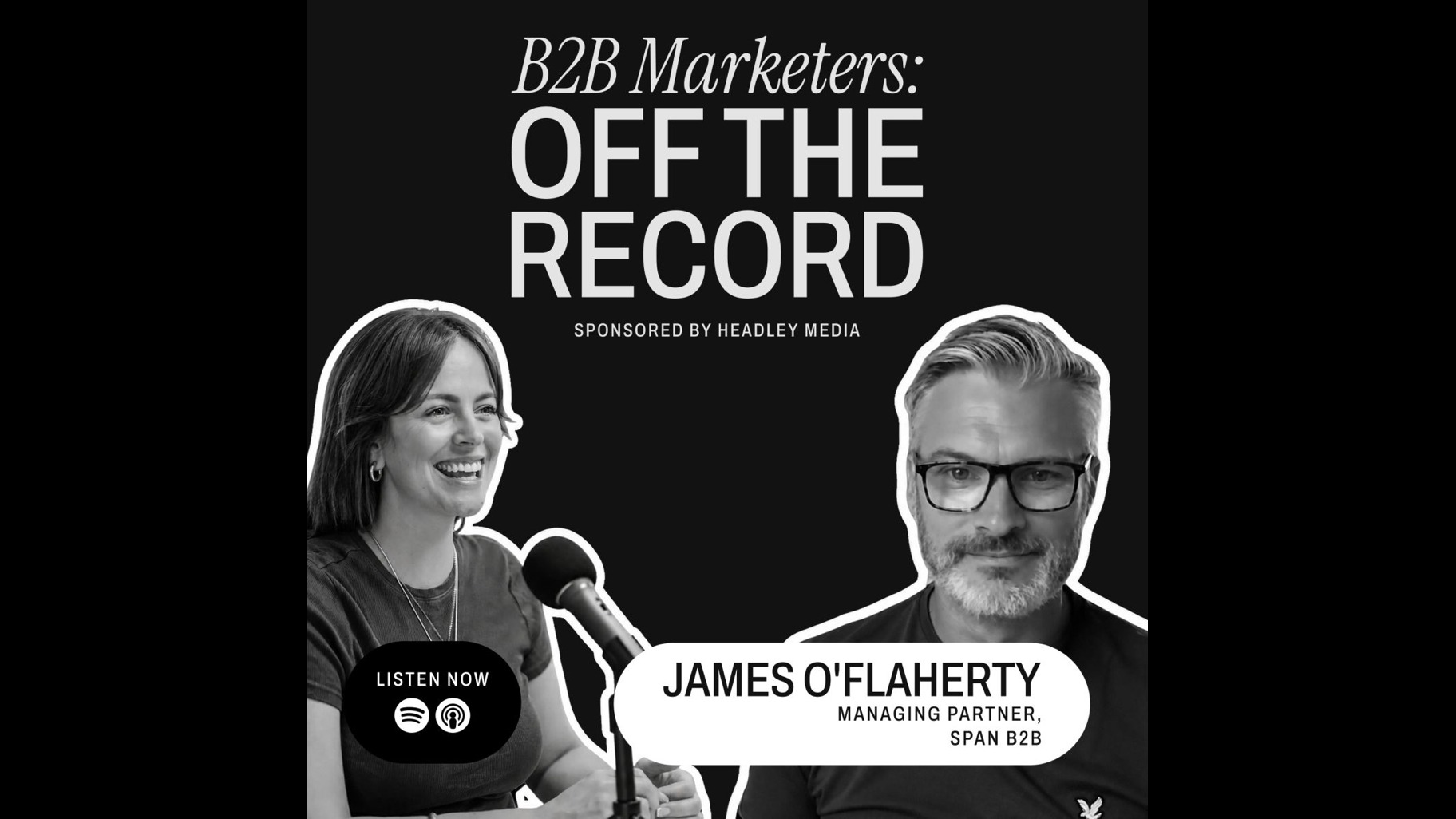
James recently joined Freya Ward on B2B Marketers: Off The Record, and one part of the conversation really summed up something we believe at Spanb2b.
B2B marketing is changing incredibly quickly.
AI is changing how we work. Buyers have access to more information than ever. Search is changing. Content is easier to create. Buying groups are getting bigger. More of the journey happens before someone ever fills in a form or speaks to sales.
But underneath all of that, the actual job of marketing hasn't really changed.
Understand people. Make good decisions. Help the business grow.
It sounds ridiculously simple, but it's surprisingly easy to lose sight of.
We talk a lot about data, intent, personalisation, attribution, automation and, increasingly, AI. All of those things can make us better marketers.
But none of them remove the need to understand the person on the other side.
- What are they actually trying to achieve?
- What are they worried about?
- What pressures are they under internally?
- Who else is involved in the decision?
- What would make them trust you?
- And what might stop them choosing you, even if your product is technically the best option?
Empathy in B2B is more than tone of voice
Empathy in B2B is often reduced to making copy sound more human.
It's much more useful than that.
It's understanding why a salesperson might not follow up the lead marketing thinks is brilliant.
It's understanding why someone can engage with your brand for six months without ever clicking an ad.
It's recognising that a buying committee isn't one neat account moving through a funnel. It's a group of people with different priorities, pressures, opinions and levels of influence.
Technology can help us understand more of that.
AI can help us research faster, spot patterns, interrogate data, create and test more things and remove a huge amount of the manual work that has traditionally taken up marketers' time.
That should give us more time to do the bit humans are actually good at.
Think.
Listen.
Question things.
Build relationships.
Exercise judgement.
And we should probably talk like normal people while we're at it.
The more technology becomes part of marketing, the more important the human side of it becomes.
Because however sophisticated the technology gets, B2B businesses will still ultimately need people to notice them, understand them, trust them and choose them.
What that means for the B2B marketers we work with
1. We start with people, not channels
Before deciding where budget goes, we want to understand who you're actually trying to influence, what matters to them, who else is involved and what might move them.
The media plan comes after that, not before it.
2. We don't mistake activity for progress
A click, download or form fill tells you something happened. It doesn't necessarily tell you whether someone is more likely to buy.
We look across accounts, buying groups, engagement, sales intelligence and pipeline to build a much more useful picture of what's actually happening.
3. We work like an extension of the marketing team
That means understanding the pressures behind the brief as well as the brief itself.
What you need to prove internally. What sales needs from marketing. Where you're stretched. Where we can challenge, support or simply take something off your plate.
Because ultimately, better B2B marketing doesn't come from adding more technology, more channels or more activity.
It comes from understanding people better, then using all of those things to do something useful with it.
The tools are changing.
The job really isn't.