Strategy gets talked about a lot in B2B. Put into practice? Less so.
Strategy means choices, trade-offs and focus, not just a bigger deck.
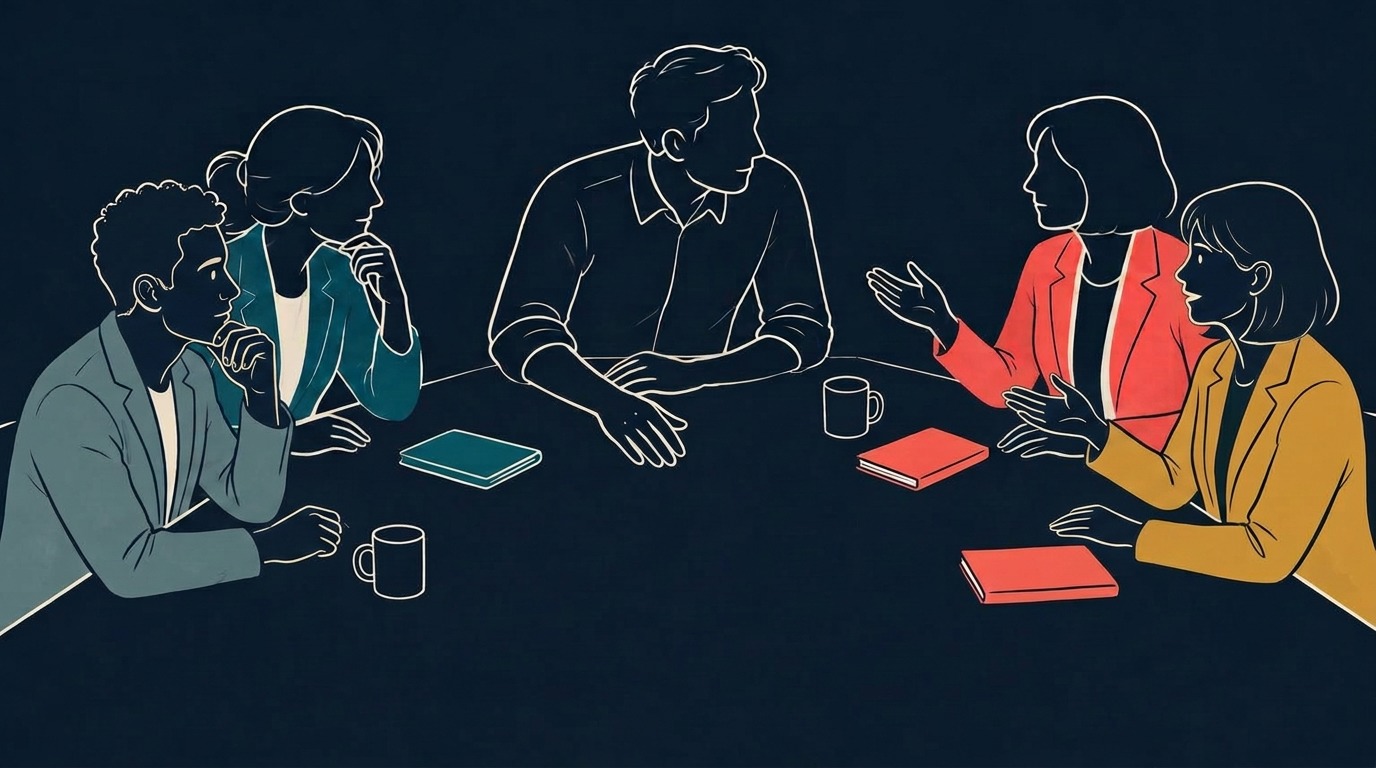
Strategy is everywhere in B2B marketing.
Brand strategy. Content strategy. Demand strategy. Channel strategy. GTM strategy. ABM strategy. Strategy-strategy. Okay this last one isn't real but...
...by putting the word strategy in front of something doesn't necessarily make it strategic.
Strategy asks harder things of us. Context, complexity to clarity, real options, choices, trade-offs, focus and a willingness to say no.
That's why we keep coming back to these quotes.
"The essence of strategy is choosing what not to do."
Michael Porter
Probably the simplest definition of strategy there is because a strategy that includes every option and every opportunity isn't making a considered choice.
And choices have consequences.
Choosing one key thing means accepting that something else gets less attention, less budget or maybe no budget at all.
That's uncomfortable. Which may explain why genuine strategic decisions are far rarer than big strategy decks.
"All men can see the tactics whereby I conquer, but what none can see is the strategy out of which victory is evolved."
Sun Tzu
Written more than two thousand years ago and still relevant.
The visible bit of marketing is usually the execution. The campaign, media, content, event, technology or creative.
Strategy is the thinking underneath it.
Why this approach? This audience? This message? Why now? What sequence? What results?
Without strategy, tactics are isolated moves. With it, they become a coherent, powerful direction.
"The main thing is to keep the main thing the main thing."
Stephen Covey
Simple. Painfully difficult.
B2B marketing rarely suffers from a shortage of things it could do.
New channels appear. New tools arrive. Competitors launch something. Sales needs something. Leadership has an idea. AI creates another hundred possibilities before breakfast.
The challenge is deciding what really matters and continuing to focus on and protect it when everything else starts competing for attention.
The hard part isn't choosing the priority. It's keeping it the priority.
"Humans are allergic to change. They love to say, 'We've always done it this way.'"
Grace Hopper
Strategy should be rooted in facts, insight and a clear-eyed view of what is really happening - not in precedent.
"We've always done it this way" isn't evidence. It's habit.
Markets shift. Customers change. Competitors adapt. What worked before may still be right, but at the very least it needs to earn that right again.
Strategy should challenge legacy thinking, not be constrained by it.
"There is nothing so useless as doing efficiently that which should not be done at all."
Peter Drucker
More relevant now than when Drucker said it.
We can optimise, automate, measure and scale more of marketing than ever before. But efficiency doesn't rescue a bad decision.
Doing the wrong thing faster, cheaper or with a better dashboard still leaves you doing the wrong thing.
Strategy comes before optimisation. Decide what deserves focus and effort first.
What gets in the way of strategy?
Strategy is one of the most overused words in B2B marketing. It also one of the least practised disciplines.
The issue isn't a lack of frameworks or intelligence. But it could be a lack of appetite.
Strategy by nature is BIG. It's the slope that gets the ball rolling; it's a word that gets the c-suite looking. It's the initiative that puts the owner in the spotlight.
It introduces perceived risk. It can close doors. It asks us to prioritise some options over others. This can be an uncomfortable place for B2B marketing to be when the business is demanding more activity, more output and more signs that things are moving.
At Spanb2b, we understand that strategy can feel like a big bet. So, we work hard to make it feel less like one.
We don't disappear into a room and just come back with a deck. We bring the right people into the thinking early, make what we know - and what we don't - visible, and ensure big decisions are presented as relevant choices that can be challenged, tested and built on.
For us, the value is in making strategy something people are part of, not something done to them. A process that is open, curious and collaborative and where different perspectives sharpen the thinking, people learn as they go, and the choices become easier to understand and support.
Done well, strategy creates more than a direction. It builds shared understanding, stronger ownership and real confidence in what happens next. It can be genuinely enjoyable too, which is something strategy probably doesn't get enough credit for.
So maybe the question isn't just what gets in the way of strategy, but how we make more people want to be part of it.